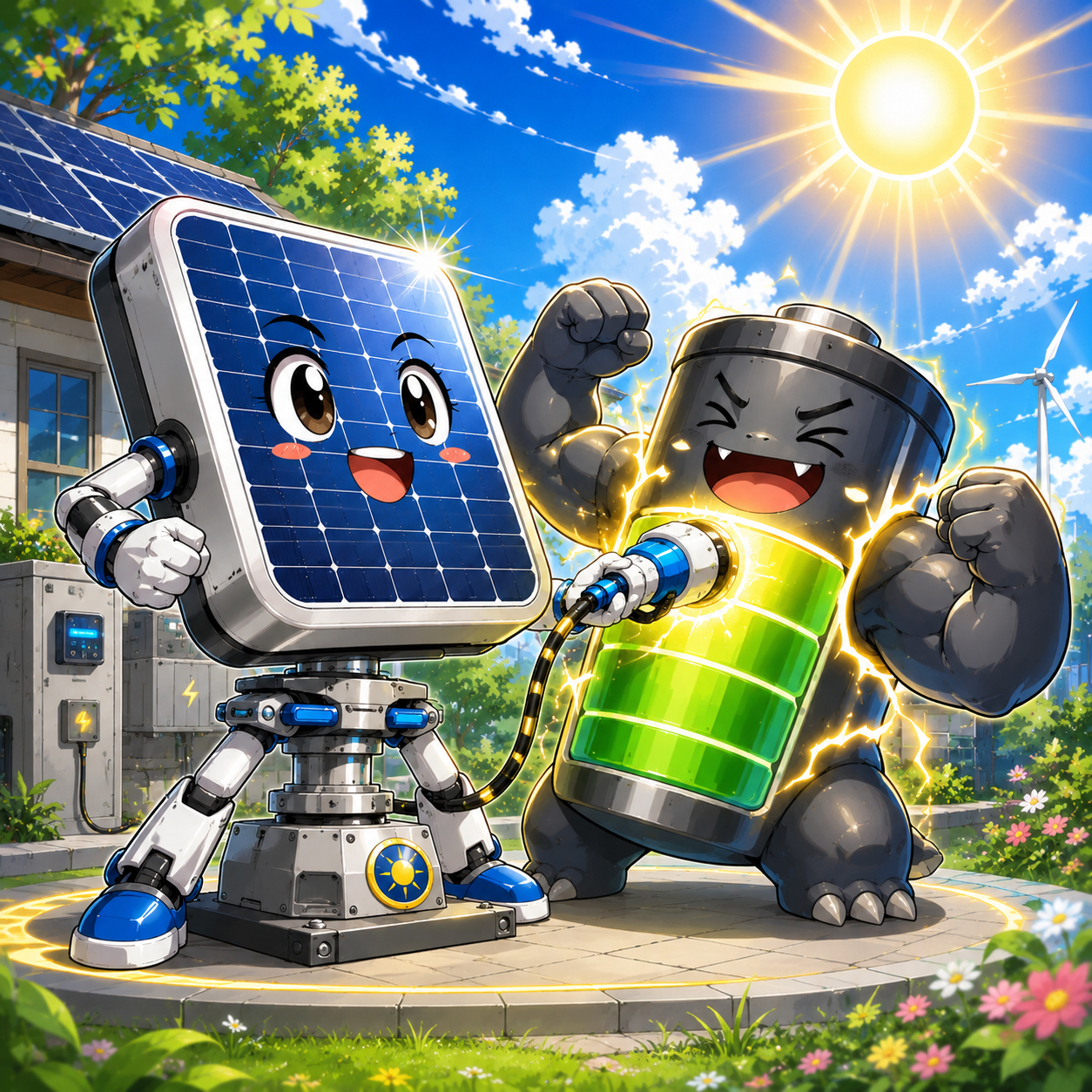
Panel 1
Solar Pod Boy serves breakfast.
The sun is bright. The pod is tracking. Sparks fly into Battery Beast. Solar Pod Boy declares the battery problem solved forever.
“Behold! A delicious beam buffet!”
Solar Pod Boy brings a burst of sunshine and expects applause. Battery Beast opens one eye and asks for the menu: watts, watt-hours, charge rate, runtime, and what loads are eating dinner later.
Episode 5 turns solar excitement into battery math. The Beast is friendly, but it does not accept vague promises.
The sun is bright. The pod is tracking. Sparks fly into Battery Beast. Solar Pod Boy declares the battery problem solved forever.
Battery Beast is not impressed by sparkles. He wants to know how much energy is coming in and how fast.

The professor explains that charging a battery is not one number. It is power, energy, charge limits, battery size, and load timing.
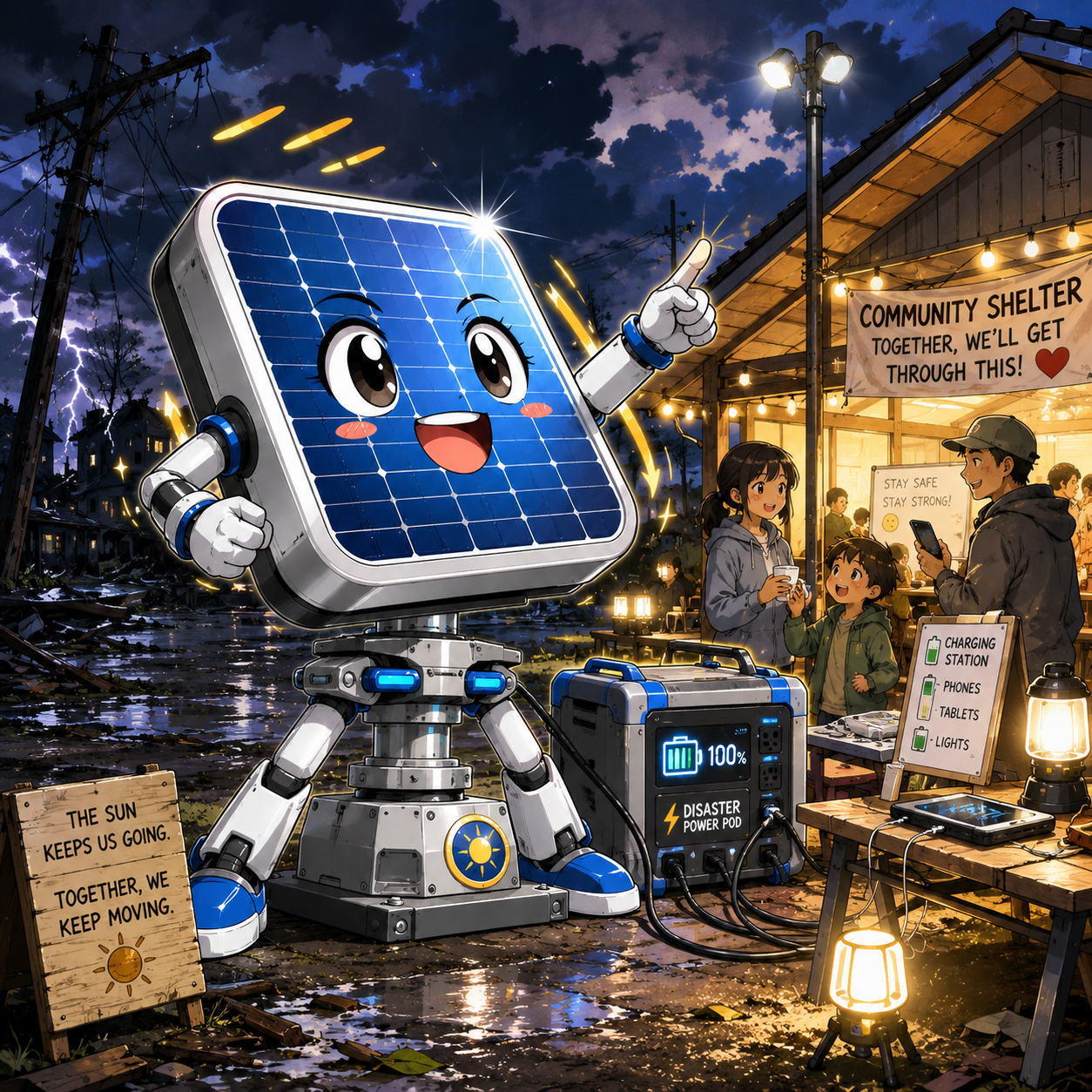
The battery must support lights, phones, communications, gate controls, maybe a small refrigerator. Suddenly the afternoon charge is not a joke.

The old master suggests that a larger fixed array and a properly sized battery may beat a smaller tracking pod.

The tracker is charging nicely, but a gust arrives. Battery Beast points out that a broken tracker serves no dinner.
Tracking can help broaden a charging window, but batteries are designed around loads, runtime, inverter limits, charge limits, weather, and safety.
Battery Beast makes the site answer real questions before the pod can brag.
Battery design comes before tracking excitement. Solar Pod Boy can help Battery Beast, but only if the system knows the load, runtime, charge limits, inverter limits, and weather reality.
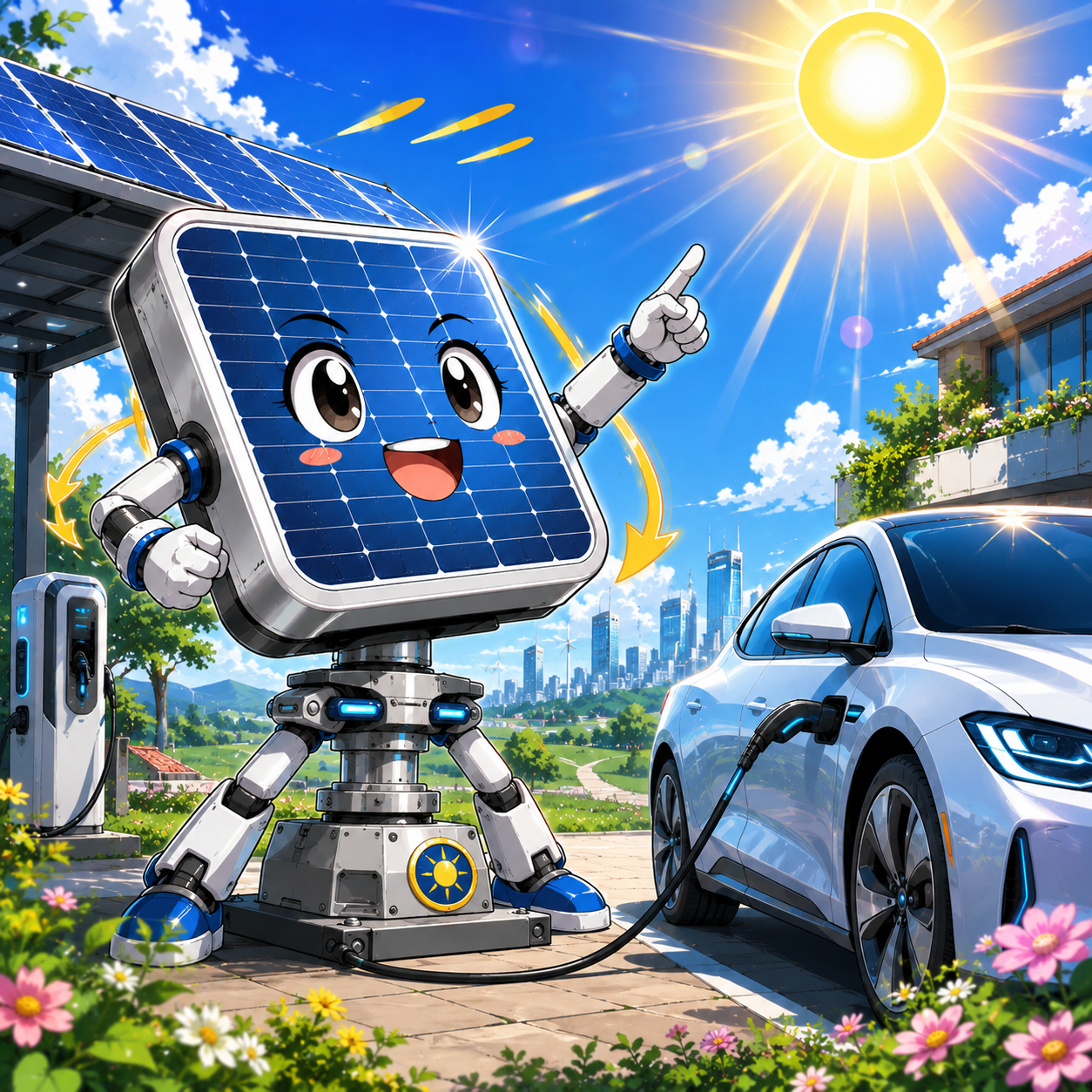
Battery Beast is hungry. The EV charger is hungrier. Episode 6 asks whether a solar pod can really support car charging expectations.
The story moves from battery appetite to EV appetite.
Previous: Episode 4 — Wind Goblin Attacks
Next: Episode 6 — EV Charger Has a Big Appetite
Read Battery and Tracking
This episode is an educational manga concept. Actual solar battery systems require qualified design, listed equipment, code compliance, permits, inspections, safe installation, and realistic load modeling.