Solar Pod Boy rides for the ranch

Farm and ranch pods need real work to do.

A solar tracking pod on a ranch should not be decoration. It should support defined loads: water pumping, gate power, barn circuits, batteries, lighting, sensors, EV/UTV charging, or remote equipment.
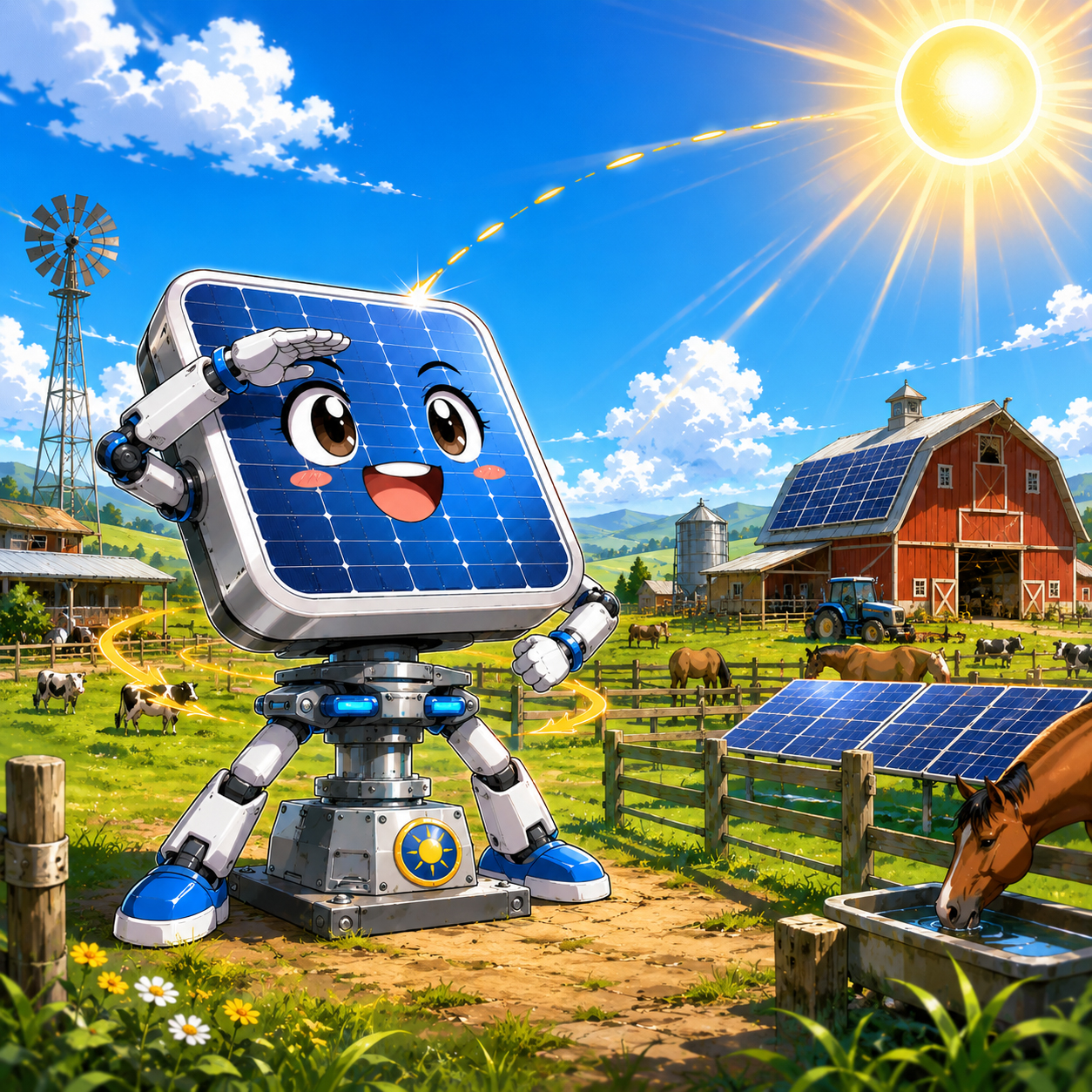
Solar tracking pod working on a farm and ranch
RANCH
POWER!

Start with the ranch load.

Solar design begins with the job. The pod should be sized around what needs power, when it needs power, and what happens if power fails.

Water

Pumps, troughs, pressure systems, controls, and storage tanks are natural ranch solar discussions.

Gates

Remote gates, cameras, controls, and access systems need reliable low-power design and weather protection.

Barns

Lighting, ventilation, small tools, refrigeration, communications, and safety circuits require load planning.

Charging

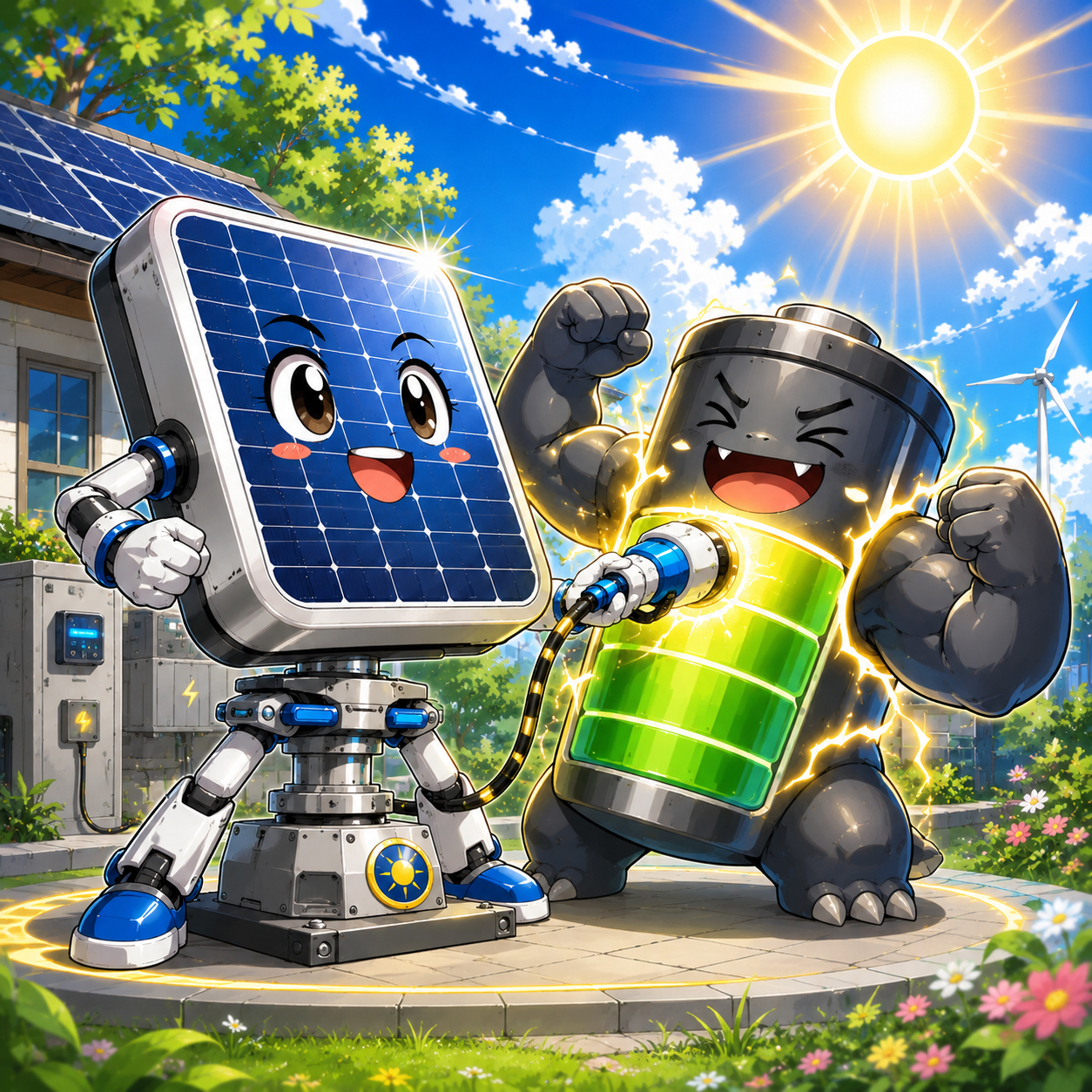
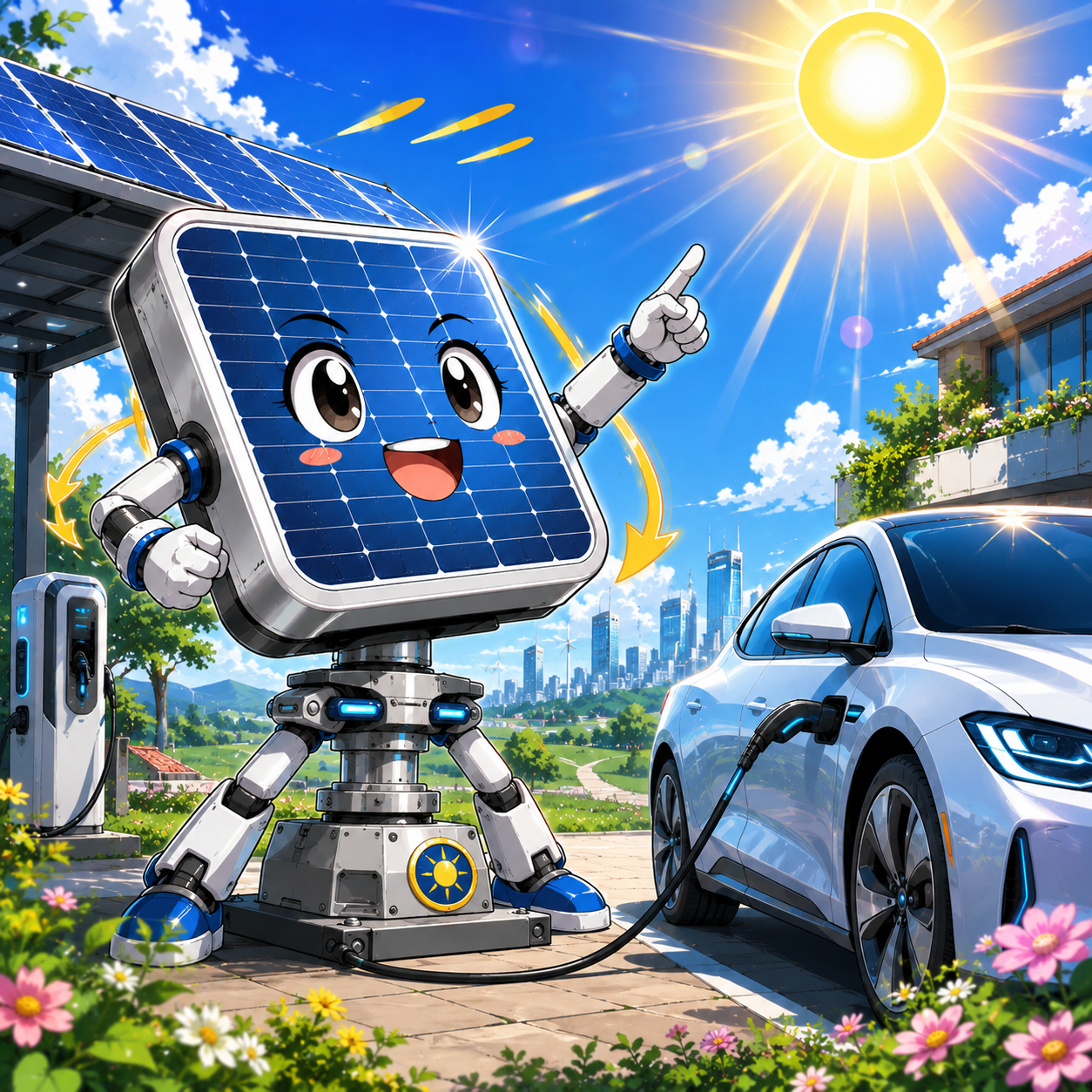
Electric carts, UTVs, trucks, tools, and small equipment may benefit from daytime solar and battery support.

Water is often the first ranch mission.

A solar pod becomes much more serious when it supports a pump, tank, or trough. The key is designing the water system and the power system together.
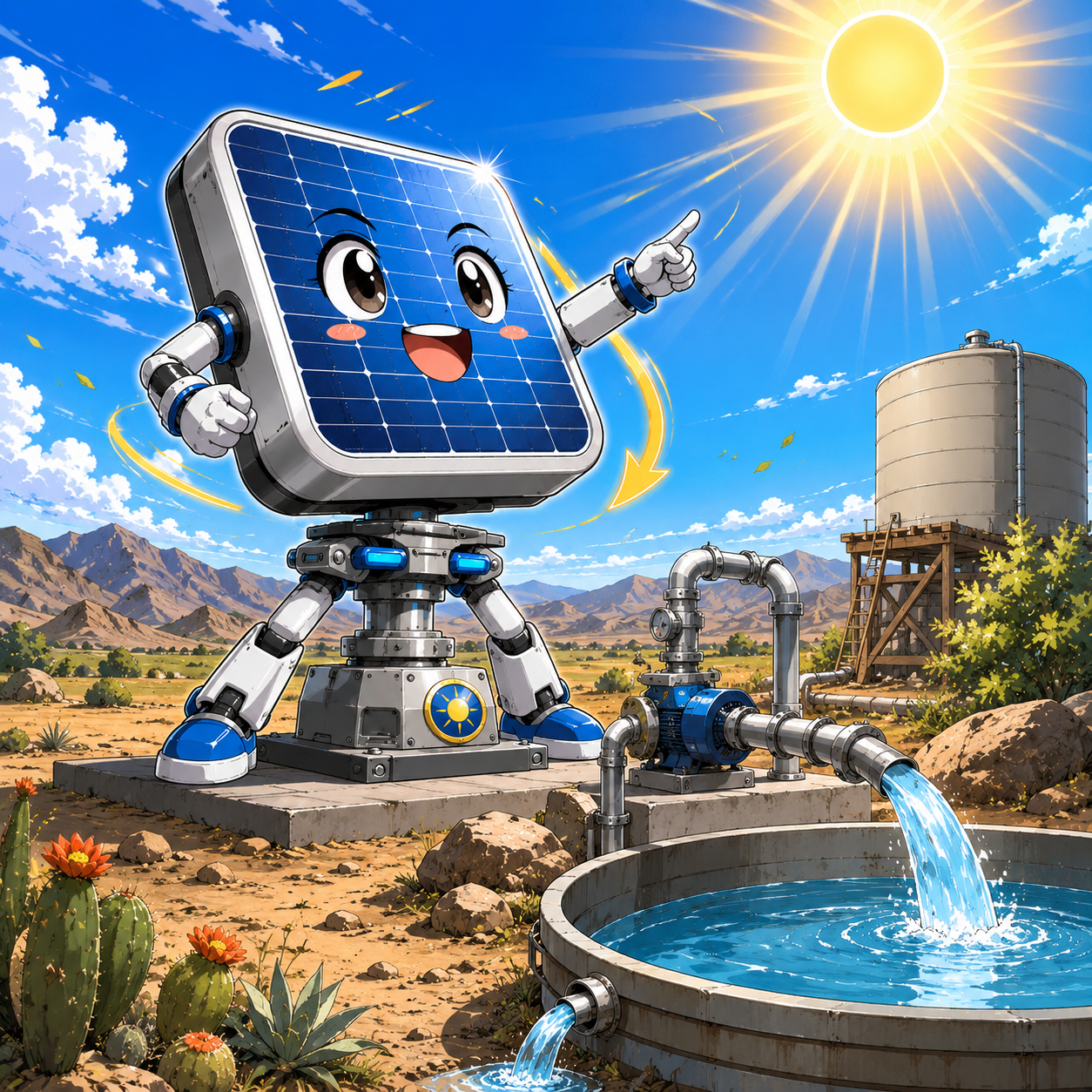
  • Know gallons per day, pump head, and run time.
  • Use water storage as part of the energy strategy.
  • Protect pumps, controls, wiring, and pipes.
  • Plan for winter, dust, animals, and service access.
Solar tracking pod powering a remote water pump

The ranch load board.

A good ranch solar plan separates critical loads from nice-to-have loads.

Possible farm and ranch pod loads

Critical water Pumping, pressure, valves, controls, and monitoring.
Security Gates, cameras, radios, lighting, and communication.
Barn power Lights, fans, small loads, chargers, and safety circuits.
Animal care Water movement, shade fans, misting concepts, and monitoring.
Charging Tools, carts, UTVs, EVs, and equipment batteries.
Backup Battery support for critical circuits when the grid is weak.

Do not guess the load.

Pumps and motors can have startup surge. Barn circuits can grow over time. Charging loads can be larger than expected. Ranch solar needs measured or conservative load planning.
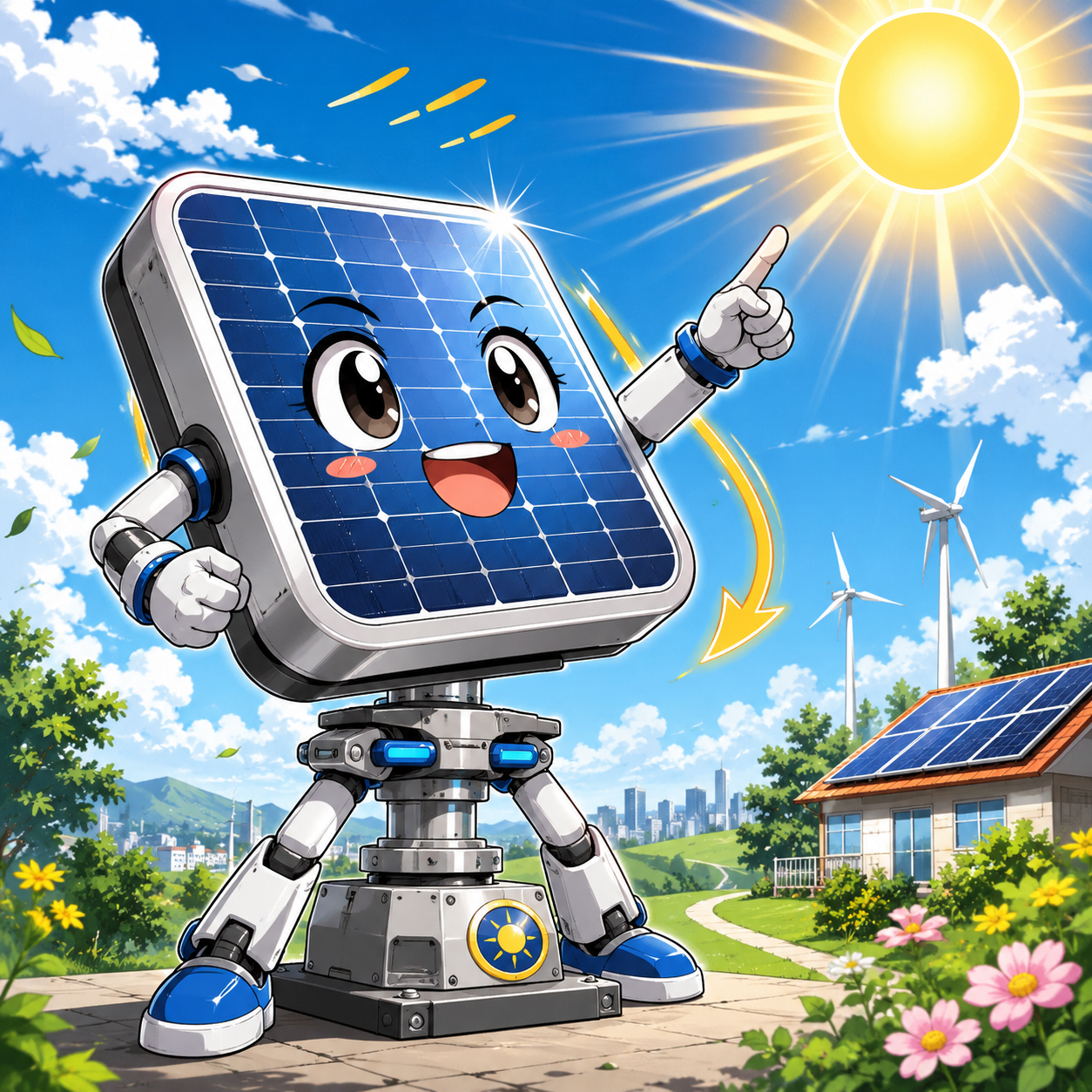
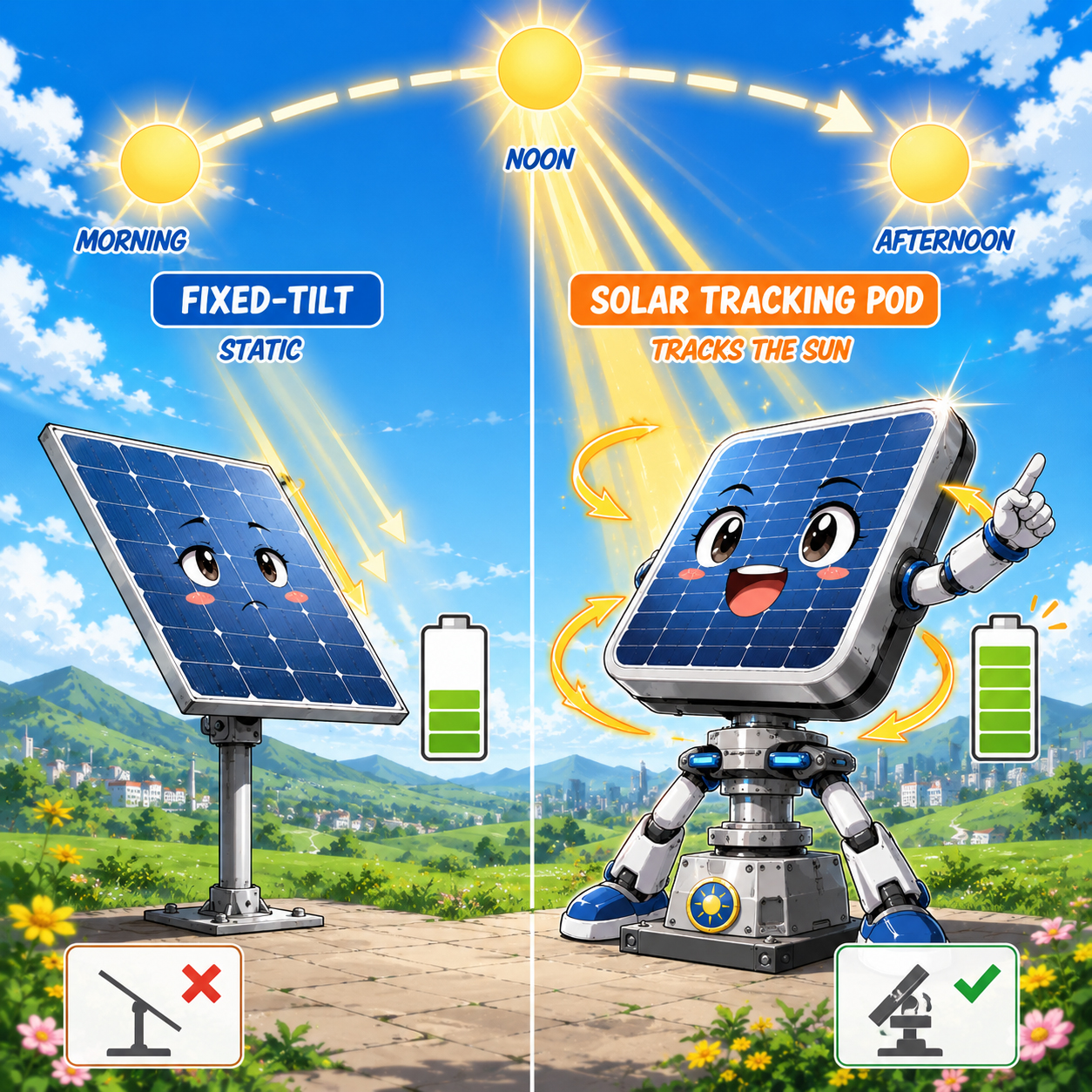
Solar tracking pod following the sun

Tracking helps only if timing matters.

A tracking pod may help extend useful production through the day. But many ranch loads can also be handled by fixed solar, batteries, and smart scheduling.

  • Daytime pumping can fit solar well.
  • Batteries help nighttime or early-morning loads.
  • Water tanks can store work done during sunlight.
  • More fixed panels may beat moving hardware.
  • Tracking must justify maintenance and wind exposure.

Good-fit and hard-fit ranch cases.

The ranch decides whether Solar Pod Boy gets hired.

Good-fit situations

  • Open ground with safe solar exposure.
  • Remote pumps or tanks away from utility power.
  • Daytime loads that can run when the sun is available.
  • Battery-backed gate, camera, or barn circuits.
  • Educational or demonstration ranch projects.
  • Sites where tracking improves a defined production window.

Hard-fit situations

  • High-wind locations without engineered foundations.
  • Animal areas where moving equipment is exposed or unsafe.
  • Dusty or corrosive sites without maintenance planning.
  • Loads that require power far beyond the pod size.
  • Sites where fixed solar is cheaper and simpler.
  • Projects without service access or a responsible owner.

Animals are part of the design review.

Ranch equipment lives near dust, hooves, horns, teeth, trucks, tractors, irrigation, and curious animals. That changes the design.

  • Fence or guard moving parts.
  • Protect exposed cables and conduit.
  • Keep clearance around rotating panels.
  • Use equipment locations that can be serviced safely.
  • Consider shade, mud, dust, and wash-down areas.
Solar tracking pod on ranch with animals

Fixed solar may be the ranch workhorse.

Fixed-Tilt Sensei is not flashy, but ranches often respect equipment that simply works.

Fixed solar wins when

  • There is plenty of roof, barn, carport, or ground space.
  • Loads are predictable and batteries can cover timing gaps.
  • Maintenance should be minimized.
  • Wind exposure is severe.
  • Equipment is near animals or vehicle traffic.
  • Adding panels is cheaper than adding moving parts.

Tracking wins only when

  • The daily production shape has clear value.
  • The location is open, serviceable, and safe.
  • The moving hardware is engineered for wind.
  • The load justifies the added cost and maintenance.
  • The owner understands the inspection commitment.
  • The system has a real mission beyond looking cool.
Wind Goblin attacking a solar tracker

The Wind Goblin lives on the open range.

Farms and ranches can be wide open. That is good for sun and bad for lazy structure.

  • Engineer foundations, ballast, or piers.
  • Define safe stow positions for storms.
  • Protect against dust, vibration, and corrosion.
  • Keep equipment away from traffic and animals.
  • Plan real maintenance access before installation.

Continue the pod lab.

Ranch pods connect naturally to water pumping, batteries, EV charging, and fixed-vs-tracking decisions.

Bottom line.

Farm and ranch solar pods are strongest when they serve defined loads like water, gates, barns, batteries, and charging. Tracking is useful only when the moving hardware earns its keep against fixed solar, wind, dust, animals, and maintenance reality.