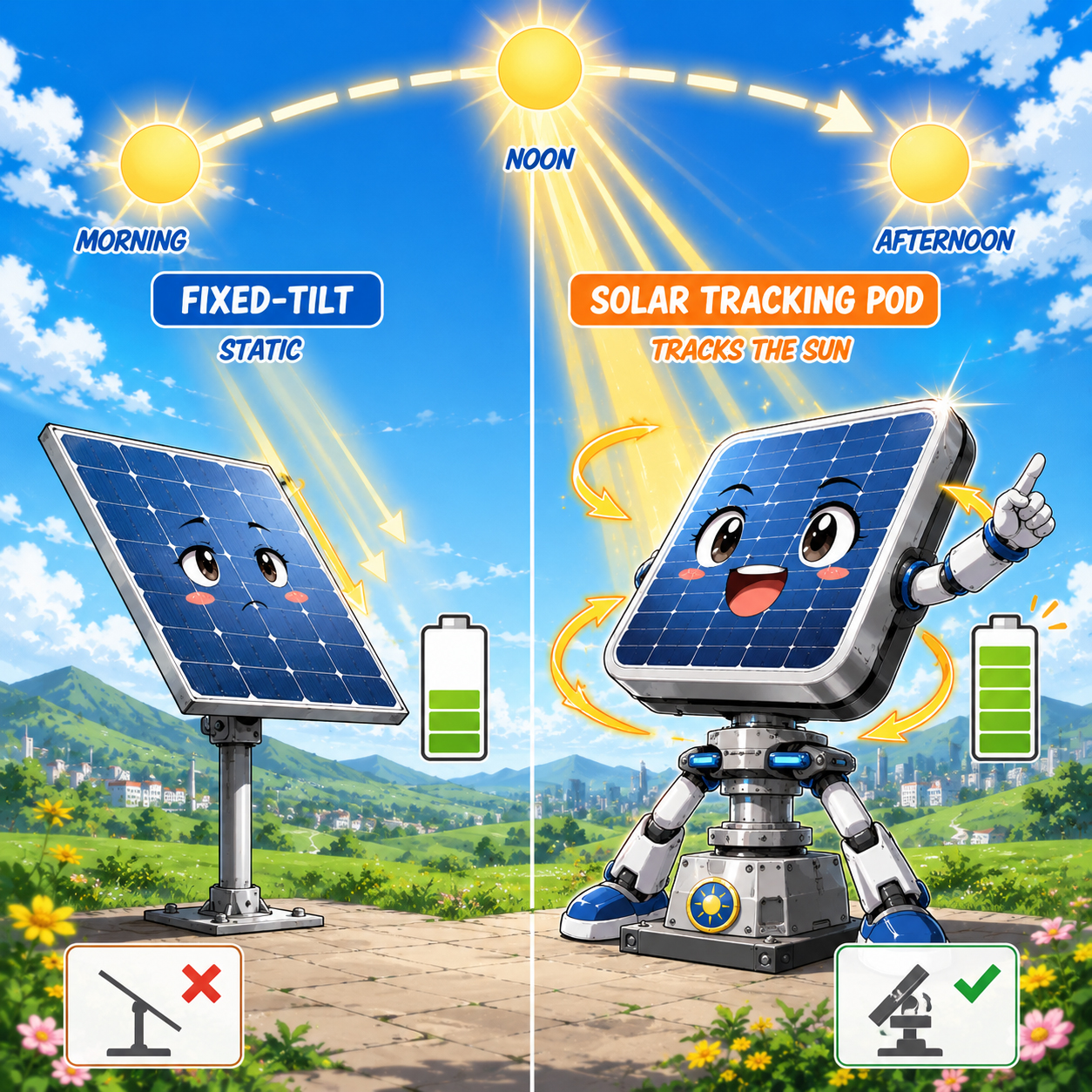
Two axes. More drama.

Dual-axis tracking chases the sun.

Dual-axis tracking moves in two directions: it can turn left-to-right and tilt up-and-down. That gives maximum sun-following attitude — and maximum need for serious engineering discipline.

Professor Sol-Turn explaining dual-axis tracking
TURN
+ TILT!

Two movements, one goal.

Dual-axis tracking tries to keep the panel aimed more directly at the sun as both the hour and the season change.

Azimuth

The tracker turns around a vertical direction, following the sun from east to west across the sky.

Tilt

The tracker changes the panel angle up or down to better match the sun’s height in the sky.

Season

The sun’s path is higher in summer and lower in winter. Dual-axis tracking tries to react to that changing geometry.

Control

More movement means more control logic, more sensors or calculations, more safety positions, and more maintenance planning.

Turn plus tilt is powerful — and fussy.

Dual-axis tracking is the most theatrical sun-chasing method. It can look brilliant in a demonstration, but the real value depends on the site and the system mission.

  • Better alignment with the sun in two dimensions.
  • More motors, joints, sensors, and controls.
  • More exposure to mechanical failure and wind problems.
  • Best reserved for specialty use cases, demos, and engineered systems.

When dual-axis may make sense.

Dual-axis is not a default answer. It needs a special reason to exist.

Possible good fits

  • Educational demonstration systems where motion is the lesson.
  • Research and prototype sites studying solar geometry.
  • Special remote loads where every watt-hour has high value.
  • Small showcase systems with controlled maintenance access.
  • Specialty systems where the load profile values broad sun capture.

Reasons to hesitate

  • More moving parts than fixed or single-axis systems.
  • More wind exposure and stow-control importance.
  • More difficult structural and mechanical review.
  • More maintenance questions over the life of the system.
  • Often harder to justify than simply adding fixed panels.

Do not confuse “fancier” with “better.”

Dual-axis tracking can be exciting, but every added movement adds cost, control logic, mechanical wear, and failure modes. It must earn its place with a real mission.

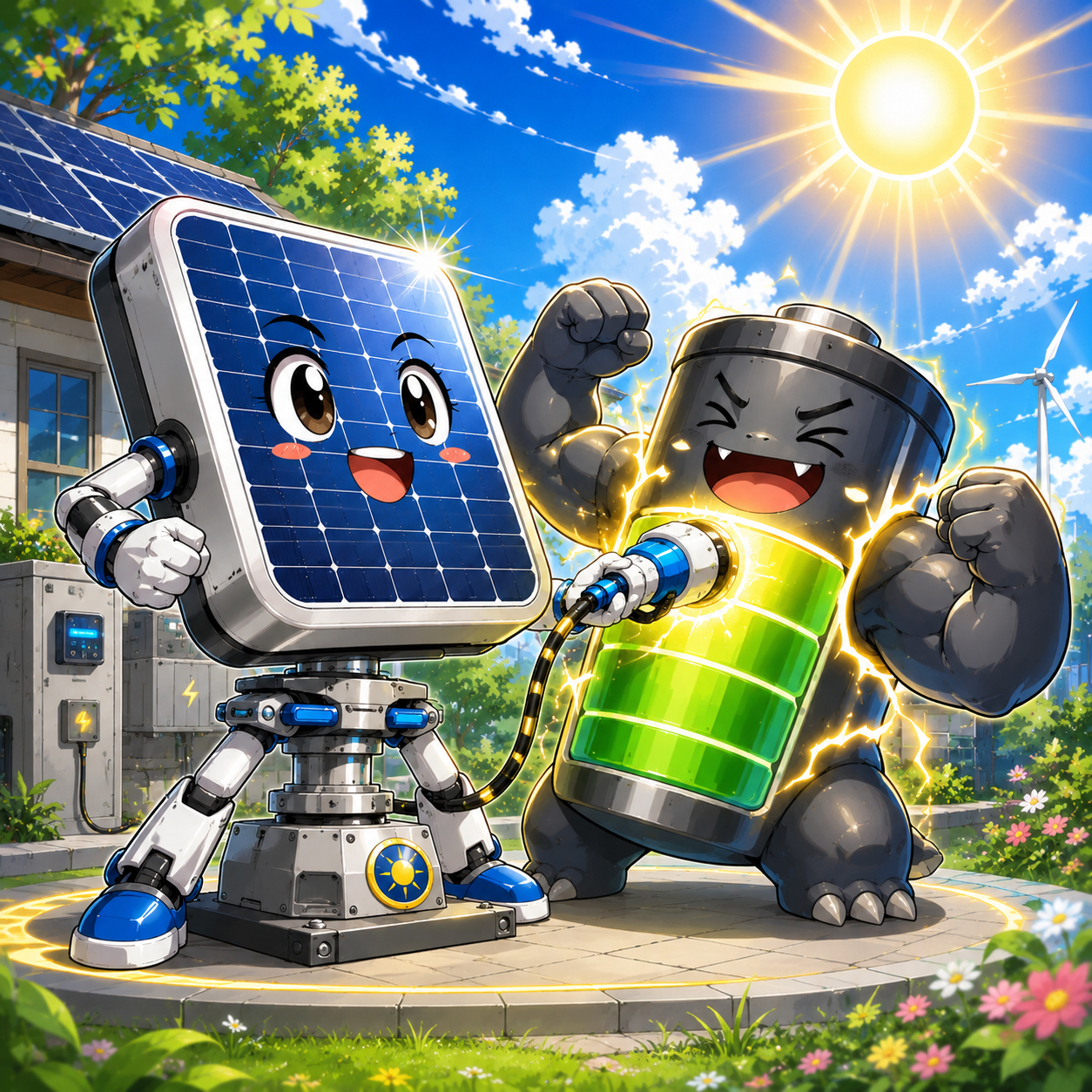
Wind Goblin attacking a solar tracker

The Wind Goblin loves dual-axis ambition.

A dual-axis tracker can face many directions. That means the system must know when not to be heroic.

  • Safe stow behavior is critical.
  • Foundations and anchoring must be engineered.
  • Motors and actuators need protection and access.
  • Wire management must handle repeated motion.
  • Controls should fail safely during faults or storms.

Single-axis may be the practical cousin.

In many real solar projects, if tracking is justified at all, single-axis has the stronger practical argument.
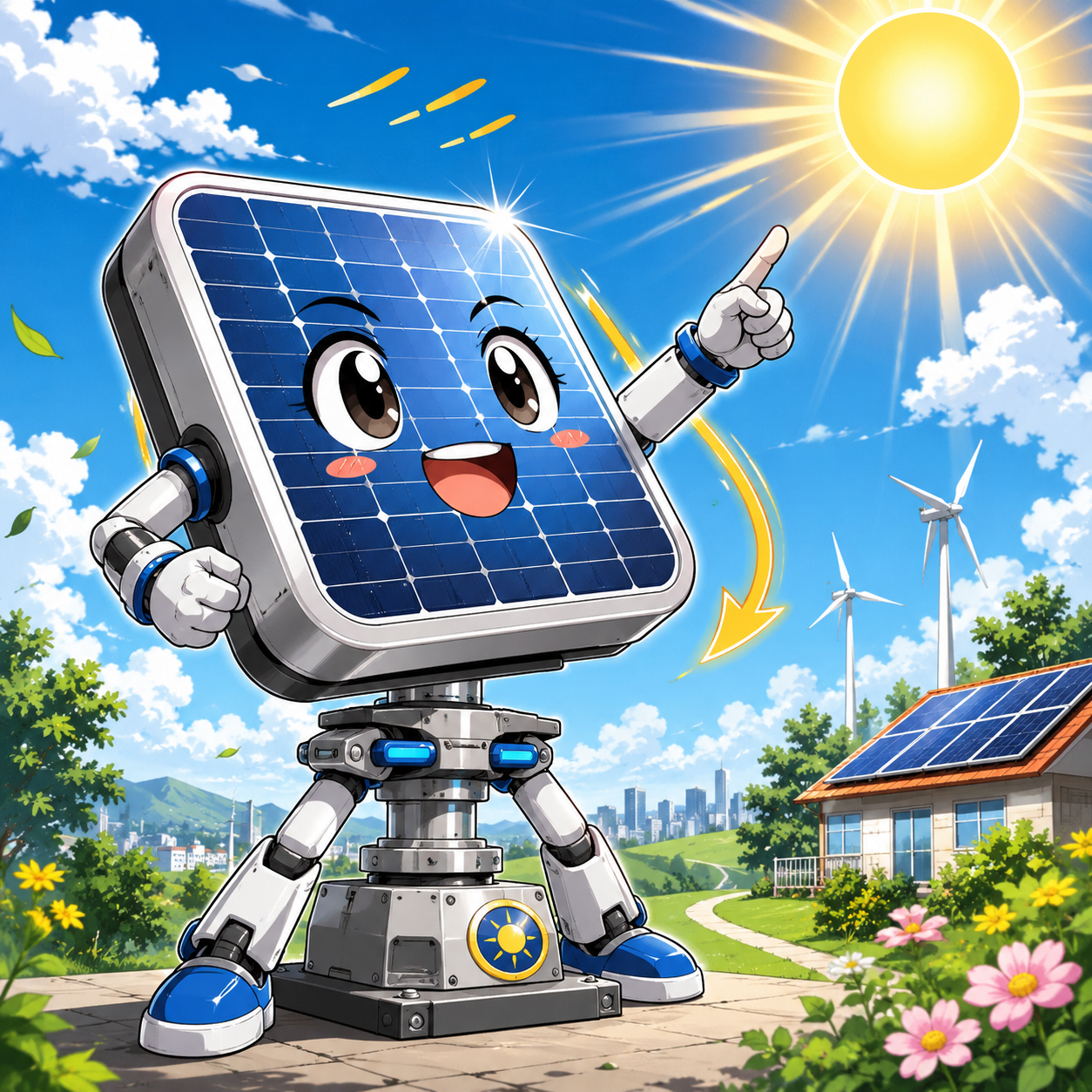
Solar tracking pod following the sun

Compare the logic:

  • Fixed tilt: simplest, strongest, often the best choice.
  • Single-axis: one movement, useful production shaping.
  • Dual-axis: two movements, more alignment, more complexity.
  • Project mission decides whether motion is worth it.

Give the motion a mission.

A dual-axis pod should have a clear job. Otherwise it is just expensive choreography.

  • STEM demonstration: students can see azimuth and tilt.
  • Battery charging: extended useful production windows.
  • Remote loads: power where grid service is weak or absent.
  • Prototype testing: compare real production curves.
Students learning from a solar tracking pod

Continue the pod lab.

Follow the related solar tracking topics and use cases.

Bottom line.

Dual-axis tracking is the most aggressive way to follow the sun. It can be excellent for teaching, testing, and specialty use cases — but ordinary projects often do better with fixed solar or simpler single-axis tracking.